
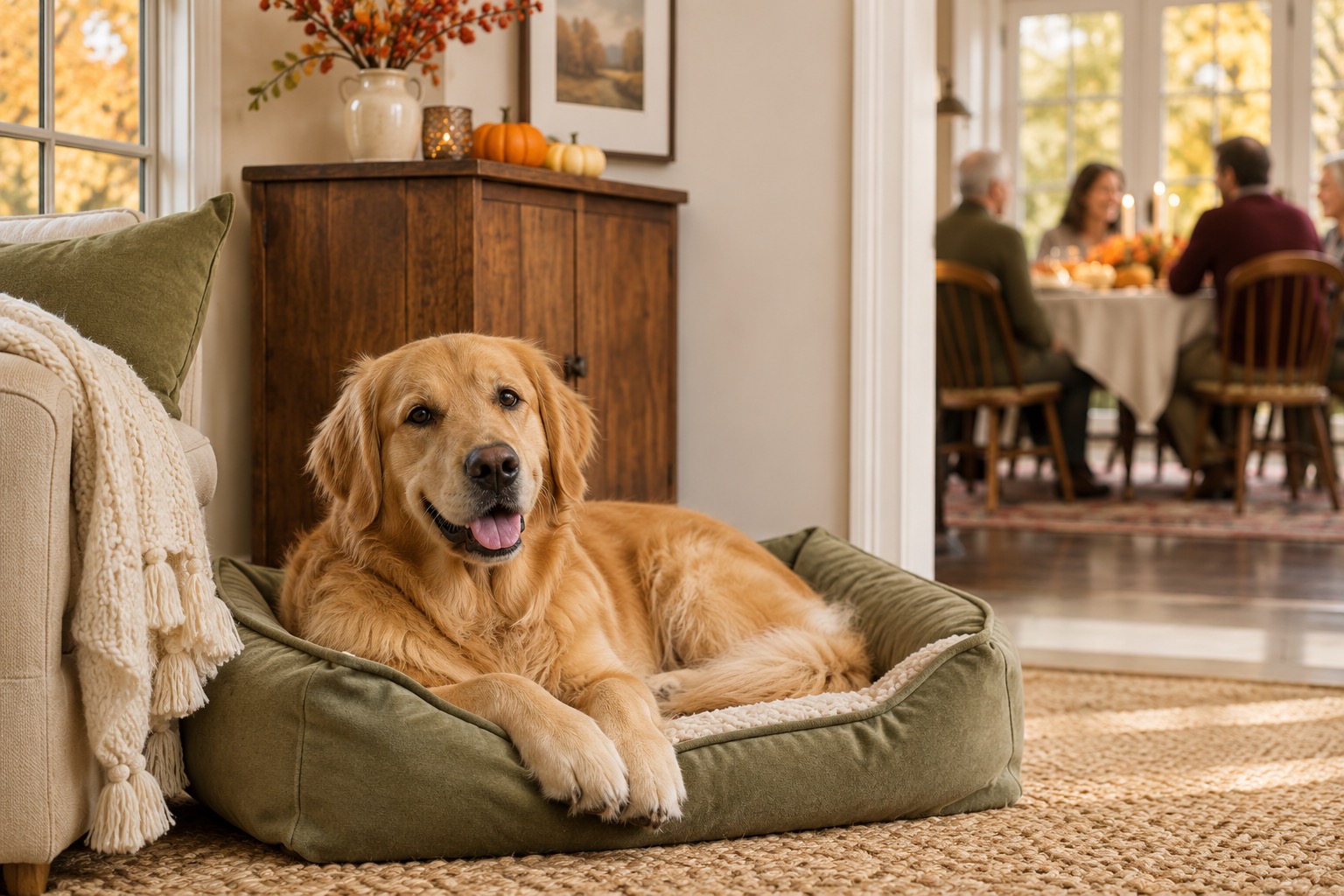
Before Thanksgiving guests arrive, choose one person to handle your dog's meals, tell visitors not to share food, and set up a quiet place away from the kitchen. A short plan is easier to follow than asking every guest to remember which ingredients are safe.
This hosting checklist is from Healthy Woof, a dog dental-powder brand. The guest message and planning card below are our organizational tools; they have not been clinically tested and are not veterinary advice.
Keep your dog's normal meal plan
The ASPCA recommends sticking to your pet's normal diet on Thanksgiving. Its guidance identifies hazards including onions, garlic, chocolate, xylitol and raw yeast dough. A mixed holiday dish can contain ingredients a guest does not know about, so a household rule of “no food from plates” removes the need for visitors to judge recipes.
Write down the food, the usual amount and the usual meal time before cooking begins. Copy your dog's existing instructions; this checklist does not calculate a new portion. Keep any veterinarian-directed diet or medication instructions with the person responsible for care.
Name a feeding lead, then record what happened
Choose one adult to prepare and serve the meal. If someone else takes over, make the handoff explicit. “Someone probably fed her” is not a completed task.
Use this card on the refrigerator or in a shared note. Fill in the last two lines only after the meal is served:
- Dog: __________
- Feeding lead: __________
- Usual food and amount: __________
- Planned meal time and place: __________
- Meal served at: __________ By: __________
- What the dog actually ate / any concern: __________
Keep “served” separate from “eaten.” A full bowl placed on the floor does not establish that your dog finished it. If you are uncertain whether food, medicine or a supplement was already given, ask the responsible caregiver instead of automatically repeating it. Ask your veterinarian about an uncertain medication dose.
For someone taking over a whole day of care, use our more detailed dog sitter instructions template.
A guest message you can copy
We're keeping our dog's usual food routine today. Please don't share food from plates or give treats without checking with [name]. Please keep bags out of reach and leave [quiet space] for the dog to rest. If food falls or you think the dog ate something, tell [name] right away.
Send the message before the visit, then repeat the essentials at the door. For children, ask the accompanying adult to help follow the household plan. Put the feeding lead's name on the card so guests have a clear person to ask.
Give the dog space during the meal
Texas A&M veterinarian Lori Teller advises letting pets meet visitors on their own terms. Do not force an interaction. A quieter part of the home may suit a dog that does not want to join the gathering; watch doors as people come and go.
Choose the meal location before guests arrive, and show the feeding lead where the bowl and supplies belong. Keep the written instructions beside the supplies rather than on a busy serving counter. Store dental powder according to its label; our storage guide covers keeping the container and instructions together.
Include cleanup in the plan
VCA recommends keeping food out of reach, blocking unsupervised access to food-preparation areas and securing garbage. Assign cleanup to a named adult, including checking dropped food and putting leftovers away. Keep that responsibility in place while guests pack take-home containers, when food may move between rooms.
After the dog's meal, follow your normal bowl-cleaning routine. Leave the completed feeding note available until everyone responsible for the dog has seen it.
If the dog gets into something
If you suspect a toxic ingestion, contact your veterinarian or an animal poison-control service immediately, as the ASPCA advises. Tell them what you know about the food or product and what happened. Do not delay seeking help while trying to complete the checklist. A guest plan helps organize responsibilities; it cannot rule out a medical emergency.