
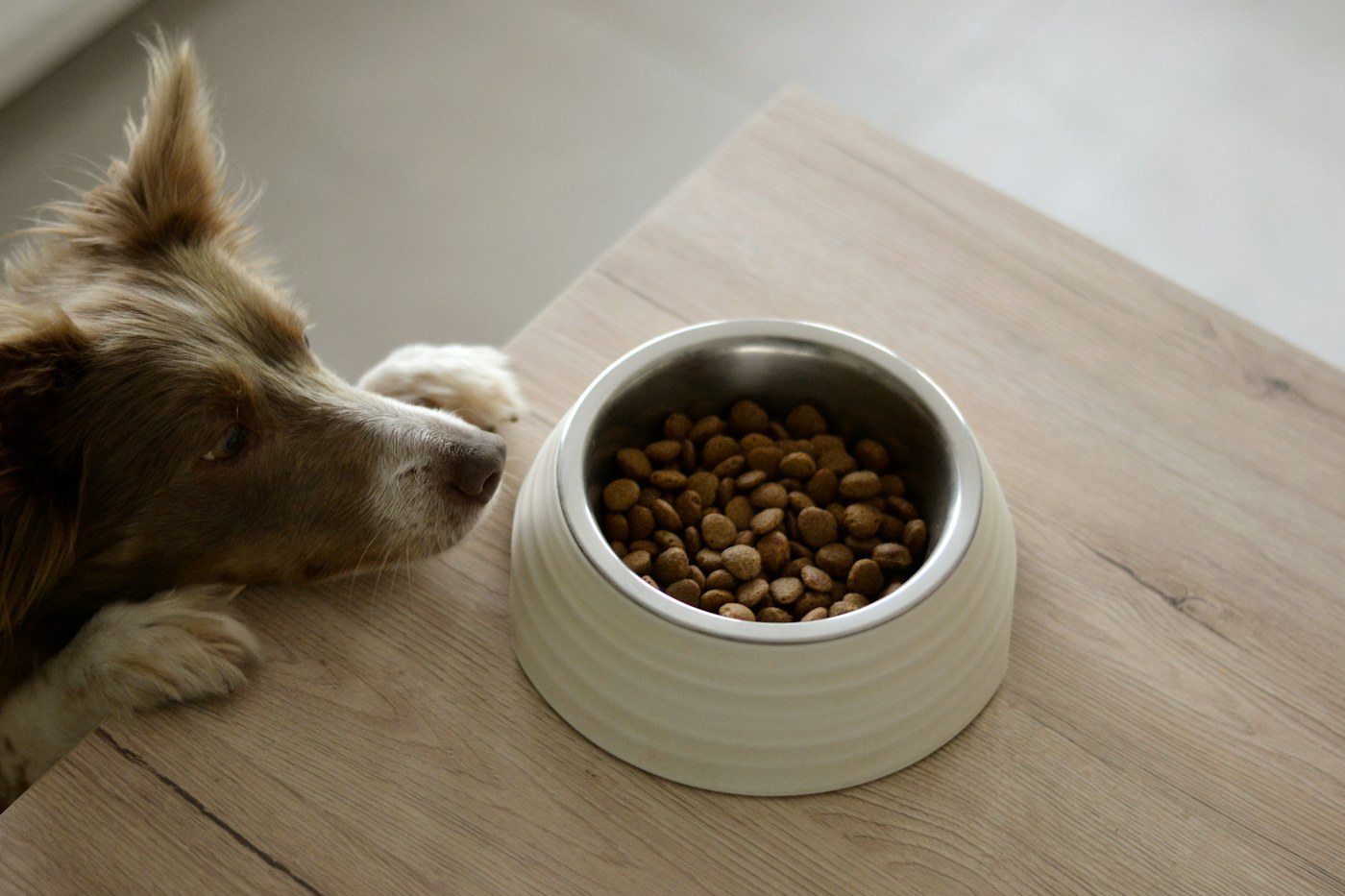
Wash your dog's food bowl after each use and its water bowl every day. That practical routine follows the FDA's advice for food bowls and the CDC's daily schedule for water bowls. If different websites give different frequencies, check whether they are talking about wet food, dry food or water.
This guide from Healthy Woof, a dog dental-powder brand, brings the two US agencies' instructions together and adds a small household task card. It covers bowl care, not a treatment for dental disease.
Why do the recommended schedules differ?
The FDA's food-handling guidance says to wash food bowls and measuring utensils with soap and hot water after every use. It also recommends a separate clean utensil for scooping food, rather than using the bowl itself.
The CDC's pet-supply cleaning schedule distinguishes between foods: clean wet-food bowls after each use, and dry-food and water bowls daily. These are different published instructions, not a reason to leave a visibly dirty bowl until tomorrow. Choosing the FDA's after-use routine for food bowls makes the household reminder simple.
Choose a washing method the bowl supports
Follow the bowl manufacturer's care instructions. For handwashing, the CDC describes scrubbing with soap or detergent and warm water, rinsing, then air-drying or using a clean towel. A dishwasher is an option for items labeled dishwasher-safe. The CDC says these items can share a load with your dishes.
Cleaning and disinfecting are separate steps. CDC guidance calls for extra attention when a pet is ill or a household member is particularly vulnerable to germs. Follow the cleaner's label and the linked guidance for those situations; do not improvise chemical mixtures.
A bowl-care card for your kitchen
The fields below are an organizational tool we created for households where more than one person feeds the dog. Copy them into a note, print them, or add them to a shared checklist. The point is to record completion clearly instead of asking everyone to remember who last washed which bowl.
- Food bowl: location or identifying description: ______.
- Water bowl or bowls: locations: ______.
- Care instructions: handwash / dishwasher-safe; where the instructions are kept: ______.
- After-meal task: person responsible: ______; completed at: ______.
- Daily water-bowl task: reminder time: ______; completed by: ______.
- Clean spare: where to find it: ______.
Example: Alex handles the breakfast bowl and writes the completion time. Sam handles the evening bowl and the daily water-bowl task. If Alex is away, the person covering breakfast takes that task too. This is an example of assigning responsibility, not a prescribed feeding schedule or a guarantee against illness.
Keep the note specific. “Done” beside a single dog's name can be ambiguous when there are several bowls around the house. “Kitchen water bowl washed, 7 p.m., Sam” tells the next person what happened. Choose a format that your household will actually update.
Include the routine when someone else takes over
Add the bowl-care card to your dog sitter instructions, alongside the established meal details. Show the caregiver where clean equipment is kept before you leave. For product containers and their measuring tools, keep the product-specific directions separate; our dental powder storage checklist helps organize those details without guessing a universal storage rule.
Sources checked November 13, 2026. Household checklist by Healthy Woof Team; no veterinary review is claimed.