
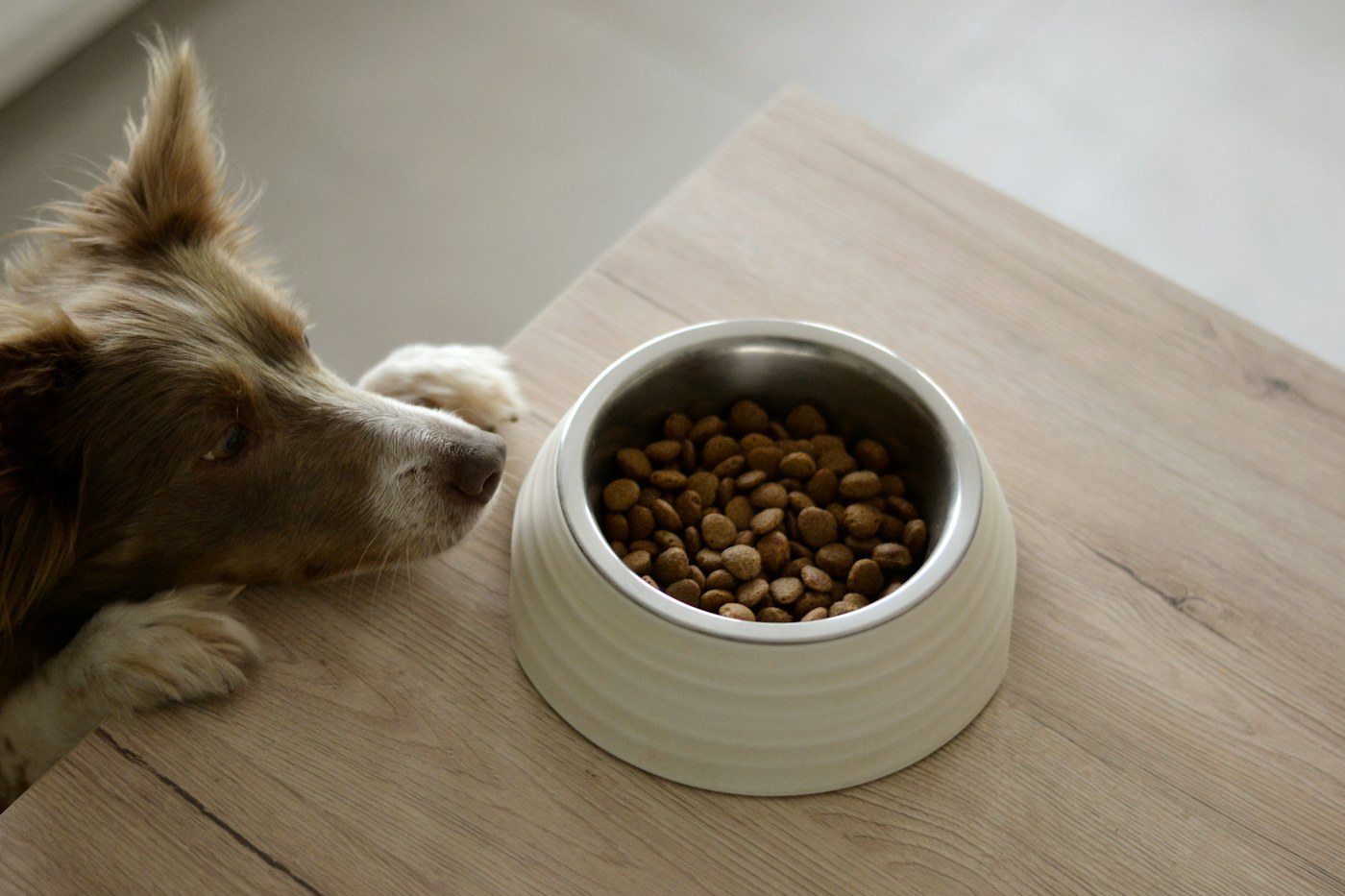
Start with the meals your dog will actually eat away from home, then pack the usual amount for each meal plus a clearly counted reserve. Bring the familiar measuring tool, keep the food identifiable, and check that you can follow its storage instructions throughout the trip.
This guide focuses on packing food for a car trip within the US. It is an organizational worksheet from Healthy Woof, a dog dental-powder brand, rather than a new feeding plan. Use your dog's established portions and any instructions from your veterinarian.
Count meals, not just nights away
A two-night trip can include very different numbers of meals. Write down your departure and return times, then mark which meals happen at home. Count the remaining meals individually. Include the drive home: arriving after dinner still means that meal needs to be packed.
The AVMA's travel guidance recommends bringing enough food for the whole trip, along with bowls and water, and maintaining familiar routines. A meal-by-meal list makes that general instruction easier to apply.
A worked packing calculation
Here is an example, not a recommended portion. Suppose a dog already eats two meals a day, each measured as 100 grams of its usual food. The family leaves Friday after breakfast and returns Sunday after dinner.
- Friday: dinner away — 1 meal.
- Saturday: breakfast and dinner away — 2 meals.
- Sunday: breakfast and dinner away — 2 meals.
- Planned food: 5 × 100 grams = 500 grams.
- If the family chooses a two-meal delay reserve: 2 × 100 grams = 200 grams.
- Total packed in this example: 700 grams.
The reserve is extra inventory for a delay, not extra food to add to daily meals. Choose its size for your itinerary and access to the usual food. If portions differ between meals, add those amounts separately instead of multiplying by one average. For two dogs, do the calculation separately and label each supply.
Your worksheet: meals away ___; established amount for each meal ___; planned total ___; reserve meals and amount ___; total to pack ___. Keep the same unit throughout. Do not substitute a kitchen tablespoon for a product-specific scoop or guess a conversion from cups to grams.
Keep the food label with the food
The FDA recommends original packaging. If the bag fits inside a protective container, keep it there. If you must transfer dry food, use a clean, dry container with a snug lid and retain the product name, manufacturer, UPC, lot number and best-by date.
Put a copy of those details with your trip checklist. When you switch to a different bag, update the record; a photograph of an old lot is not useful for identifying the current food. Keep foods for different dogs distinguishable.
Plan storage at every stop
Follow the food's label. FDA guidance says dry food and unopened canned food should stay cool and dry, below 80°F. Unused canned or pouched food needs prompt refrigeration or disposal; FDA specifies a refrigerator at 40°F or below. Confirm refrigeration at your destination before packing food that depends on it. Do not assume a parked car or an unmonitored cooler provides suitable storage.
For dental powder or another established supplement, keep its own instructions and matching measure together. Our dental powder storage guide covers that separate product check. A trip is not a reason to invent a new dose.
Keep a serving kit accessible
Pack food and water bowls, water, the usual measuring tool, and a way to clean and dry the equipment. Keep the next meal accessible without unpacking every suitcase. The ASPCA advises against feeding in a moving vehicle; plan a suitable stop instead. Ask your veterinarian about individual travel-feeding needs if your dog has motion sickness or a medical feeding schedule.
- Meal list includes departure and return days.
- Each dog's food and measure are clearly identified.
- Reserve is counted separately from normal portions.
- Current packaging details and storage directions travel with the food.
- Destination storage and bowl-cleaning arrangements are confirmed.
- Everyone helping knows which meal was last served.
If care changes hands during the trip, add the meal details to our dog sitter instructions template. Use the bowl-washing guide to plan the cleaning routine. These small preparations keep the packing list connected to the care your dog already receives.
Sources checked November 18, 2026. Worksheet and example by Healthy Woof Team. No veterinary review is claimed.