
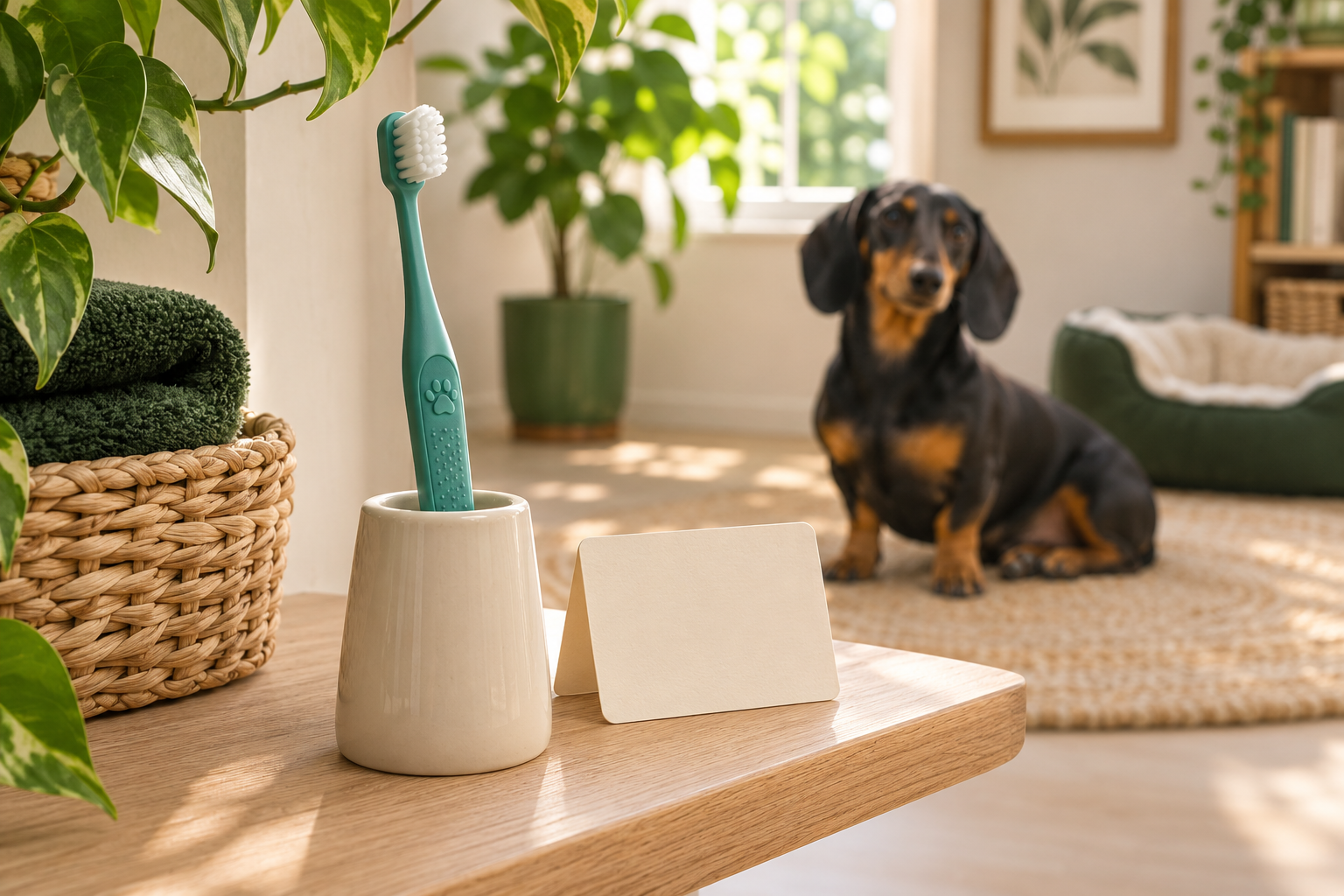
Rinse your dog's toothbrush thoroughly after each brushing session. Plan to replace it about every three months, and follow the brush manufacturer's instructions if it needs replacing sooner. Give each dog a separate brush. Those basic steps are easy to overlook once the brushing itself is finished.
This guide focuses on looking after the tool you already use. The maintenance card below is an organizational aid from Healthy Woof, a dog dental-powder brand, rather than a veterinary assessment.
Start with the instructions for your brush
VCA Animal Hospitals recommends thorough rinsing before putting a toothbrush away, replacement every three months and a different toothbrush for each dog. VCA also advises washing your hands with soap and water after brushing.
Keep the packaging or save a photograph of the care instructions when you open a new brush. A manual bristle brush, silicone finger brush and powered device may have different care directions. Do not assume a method approved for one item applies to another.
For example, Beaphar's instructions for its regular dog and cat toothbrush say to replace that brush every three months or sooner if it looks worn, and to prevent the pet from chewing it. That is a specific manufacturer's instruction, not a claim that every pet toothbrush has identical materials.
Make rinsing part of finishing the session
Before putting the brush away, check that you have followed its cleaning directions and rinsed it thoroughly. Small Door Veterinary also recommends rinsing after every session. If you cannot remove residue using the approved method, ask the manufacturer whether the brush should be replaced.
Choose a consistent storage place that follows the product's directions and is out of your dog's reach. Keep its care instructions there too. For a powered brush, check which components can get wet before cleaning; do not treat the entire device like a manual toothbrush.
Give each dog an identifiable brush
In a household with several dogs, a color alone can be confusing when someone buys a replacement. Pair the color with the dog's name in your care note, and update the note when the brush changes. Label the storage location so another caregiver can identify the right tool without guessing.
If a sitter will brush your dog's teeth, show them the brush and the routine your dog already tolerates. Add the location and care instructions to your dog sitter instructions. A visit from a new caregiver is not the time to improvise a new brushing method.
A toothbrush replacement card you can copy
Use one card per dog. A calendar reminder is a prompt to review the brush, not a reason to keep using a worn one until the date arrives.
- Dog's name: __________
- Brush brand and model: __________
- Color and storage location: __________
- Opened on: __________
- Replacement reminder: __________
- Manufacturer's cleaning instructions saved at: __________
- Veterinarian's individual instructions, if any: __________
- Replaced on and reason: __________
For a brush opened on November 26, a three-month reminder would fall on February 26. Follow an earlier replacement instruction if the brush looks worn or its manufacturer specifies a shorter interval. Recording the actual replacement date keeps the next reminder tied to the new brush.
Common questions about brush care
Can I boil it or put it in the dishwasher?
Check the exact product instructions rather than assuming heat is allowed. The veterinary rinsing recommendations cited here do not establish that boiling or dishwashing is suitable for your particular brush. If no approved method is listed, ask the manufacturer instead of inventing one.
Should I use mouthwash or a homemade disinfectant?
This guide does not recommend a chemical soak. Follow the manufacturer's care directions and any instructions your veterinarian gives for your dog. Instructions for cleaning a human toothbrush should not automatically be transferred to pet equipment.
What about after dental treatment?
Ask the treating clinic when to restart brushing and whether to use a new brush. Keep those individual instructions with the card. Do not let a generic replacement reminder override the treatment plan.
For a puppy starting home care, see our guide to starting puppy toothbrushing. If you are comparing additional dental products, our VOHC Seal guide explains how to check a specific product's listed claim. Looking after the toothbrush remains a separate task from choosing those products.
Sources checked November 26, 2026. Cover image is an AI-generated illustration; it does not depict a specific toothbrush sold by Healthy Woof.