Photo by Erin Vey from Unsplash
On This Page:
Dental disease is common in dogs, so oral care belongs in a preventive-health routine. At Healthywoof.com, we sell dental powder, but that does not make it a replacement for brushing. This comparison separates convenience from evidence of dental benefit.
But which method is actually better for your pup?
Let’s check the pros and cons of each and see what works best with a furry friend.
Traditional Teeth Hygiene – Brushing
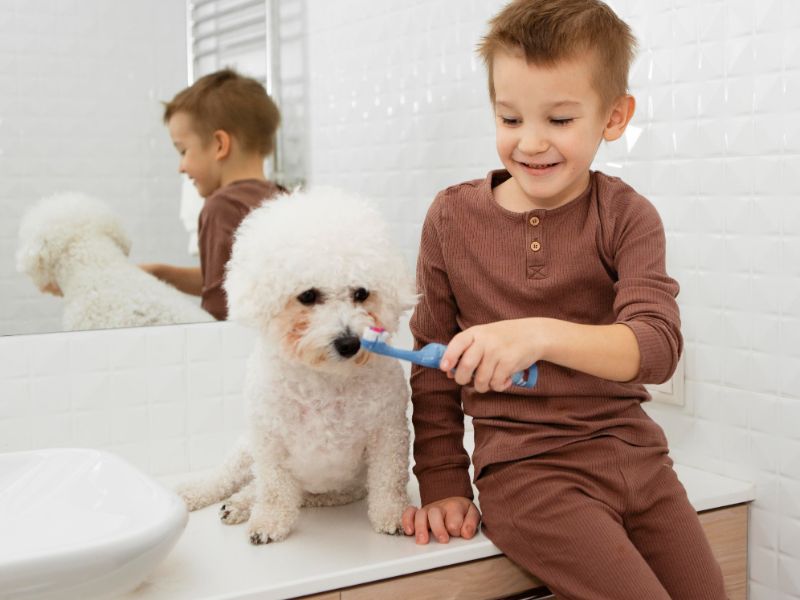
Brushing with a soft brush and dog-specific toothpaste removes soft plaque; it should not be expected to remove established tartar. Introduce handling gradually from an early age and ask your veterinarian how to adapt it for your puppy.
When it comes to the pros of a good old brush, it has a range of obvious benefits:
- It’s highly effective in removing plaque and preventing tartar.
- Pro cleanings performed at vet clinics are deep and help reveal hidden issues.
- Brushing involves a toothbrush, dog-specific toothpaste and time. Compare costs using actual products rather than assuming that one method is always cheaper.
The cons of using a canine paste and a brush are there, too, so here’s what you have to know:
- The process requires a stable routine and some degree of training (for you and your fido) that you both should get used to.
- Some dogs need gradual training to accept brushing. Stop if handling causes pain, and ask your veterinarian for help.
- Professional dental care is separate from home brushing. It may involve examination, imaging and cleaning under anesthesia when indicated.
- Anesthetic suitability and monitoring should be assessed for the individual dog. Do not replace recommended dental treatment with powder because a dog is older.
Does Tooth Powder Work

Photo by Liana S from Unsplash
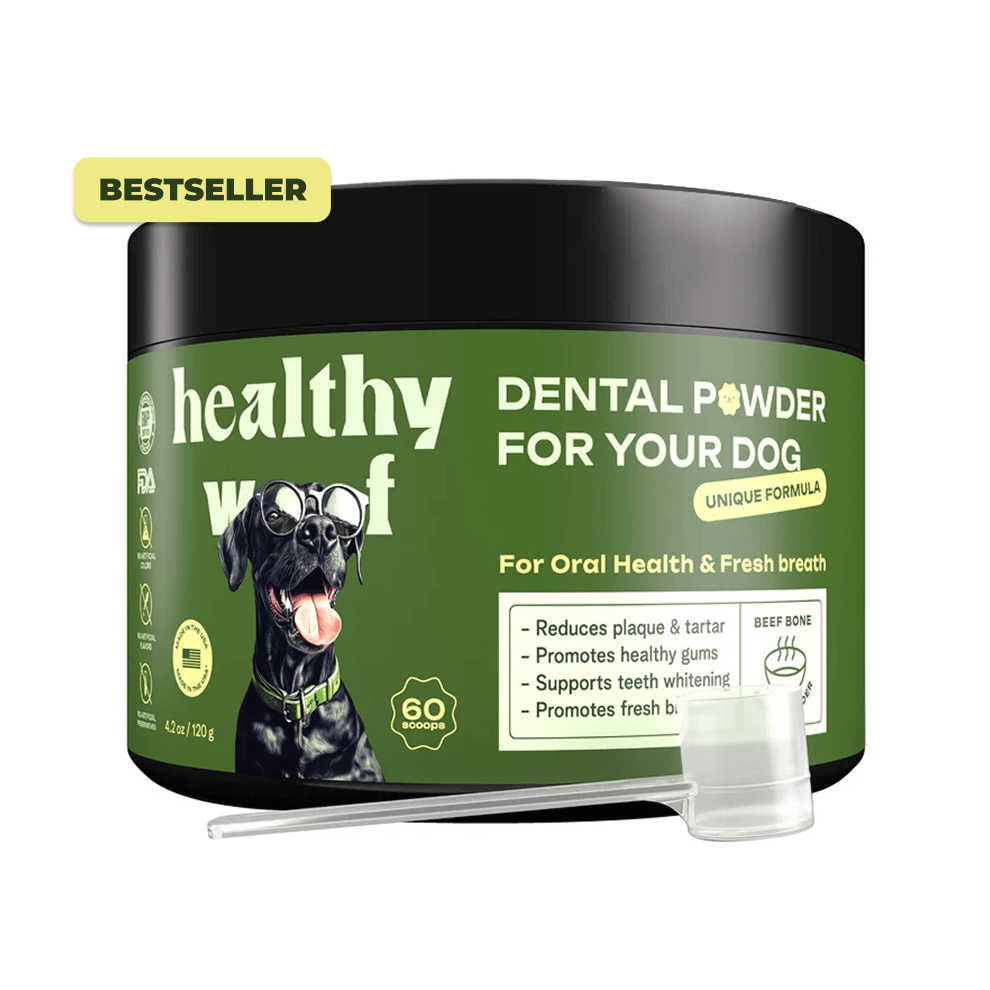
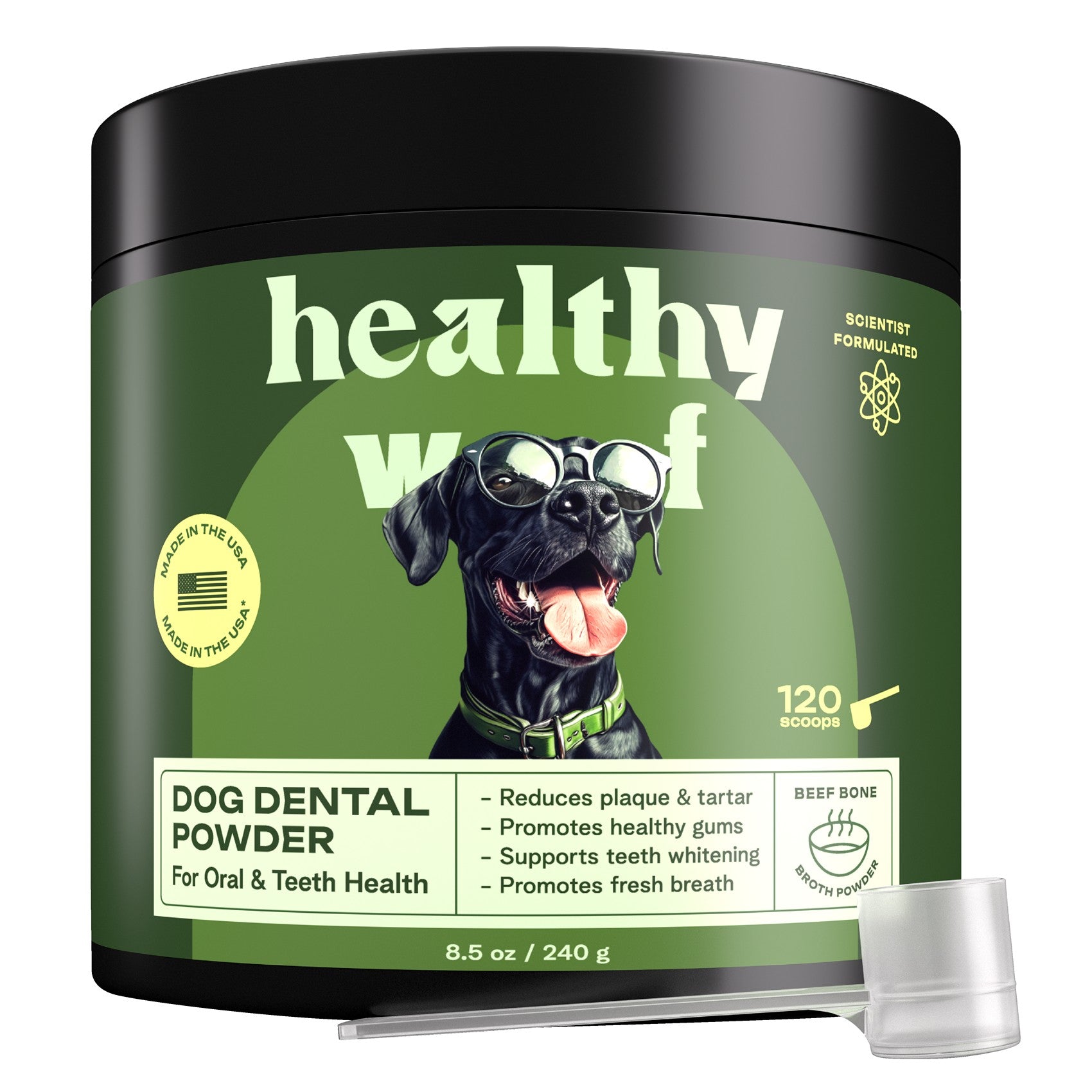
Dental powder is usually added to food according to the product label. Our catalog lists available products. Ingredient studies do not establish the effectiveness of every finished formula. Powder does not replace brushing or veterinary dental care.
Consider these practical points when discussing a dental powder with your veterinarian:
- Ease of administration. A food topper may be convenient, but follow its actual serving directions. Convenience does not establish plaque-control effectiveness.
- Dogs that resist brushing. Discuss a gradual training plan and suitable supplementary care. Powder is not a treatment for anxiety.
- Bad breath. Persistent odor can signal a dental problem and should be assessed. Do not assume a powder will treat the cause or remove yellow deposits.
- Ingredients and suitability. Natural ingredients do not establish universal safety or equivalence to brushing. Suitability depends on the formulation, directions and individual dog.
The cons? Yes, even the Sun has spots. Here are some of them:
- Evidence and expectations. Outcomes and timing depend on the specific product and dog. Do not assume that every powder has demonstrated results within a set number of weeks.
- There’s no deep cleaning. You can’t fix existing mouth health issues or remove hardened tartar using the product.
- Follow the directions. Use any selected product as labeled. Daily use alone does not guarantee a result.
- Your furry gourmand might not like the taste. Are you a parent of a picky eater? Chances are they may refuse the delicacy with powder on it.
A dental powder may be convenient for some households, including dogs that resist mouth handling. That does not make it the best way to prevent dental disease. Choose a care plan with your veterinarian and continue gradual brushing training when appropriate.
Be patient when introducing dental care and reward cooperation. Powder may be convenient to administer, but convenience does not establish better plaque control than brushing. Our blog offers more information about daily care; persistent pain or reluctance to eat needs veterinary attention.